

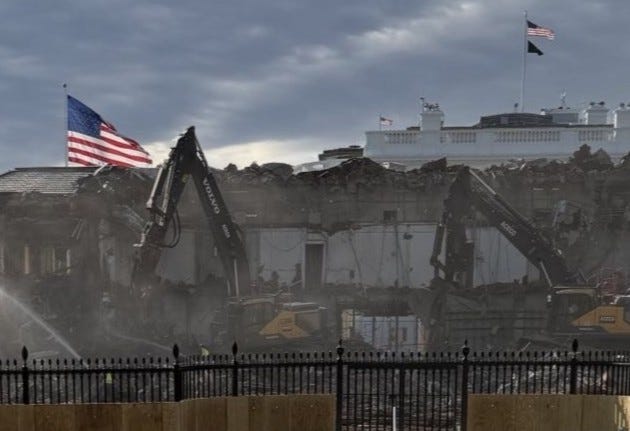
It’d be hard to come up with a better metaphor for the Trump Administration’s approach to policymaking than the White House’s East Wing–or, more accurately, the hole where the East Wing used to be.
Trump used executive authority to quickly tear down the historical structure, but discovered (from a court ruling yesterday) that it may require Congress to build something to replace it. Sound familiar?
Destruction by the executive branch is quick and easy. Construction by the legislative branch is slow and hard.
With the East Wing, the result of this combination is a big hole in Trump’s literal back yard. So how do we avoid a similar situation in our (less literal) back yards?
In the realm of education policy, this pattern of “quick executive destruction / slow legislative construction” has played out a number of times in the Trump Administration, and we’ve seen a common response strategy emerge. It generally looks like this:
Avoid the destruction: Do not overcomply with federal executive actions that exceed the government’s legal authority. If the “mission risk” is high (i.e., complying would threaten your organization’s mission), carefully evaluate the actual “legal risk” before complying.
Do your own construction: States have a lot of authority over education policy, regardless of the federal administration. If you want to advance solutions-oriented education policies for your state’s needs, look to governors and state legislatures rather than Congress.
Through my work at Education First over the past year, I’ve seen cross-state coalitions as an effective approach for both strategies. First, these coalitions avoid unnecessary destruction by sharing the cost of legal advice about potential overcompliance. Second, they allow leaders to share and copy constructive policy ideas from other states.
So you want to avoid “pulling an East Wing,” I’d recommend trying those strategies first.
I wrote about some of this over a year ago as part of Education First’s Facts in the Flood series, and the advice still seems as relevant as ever:
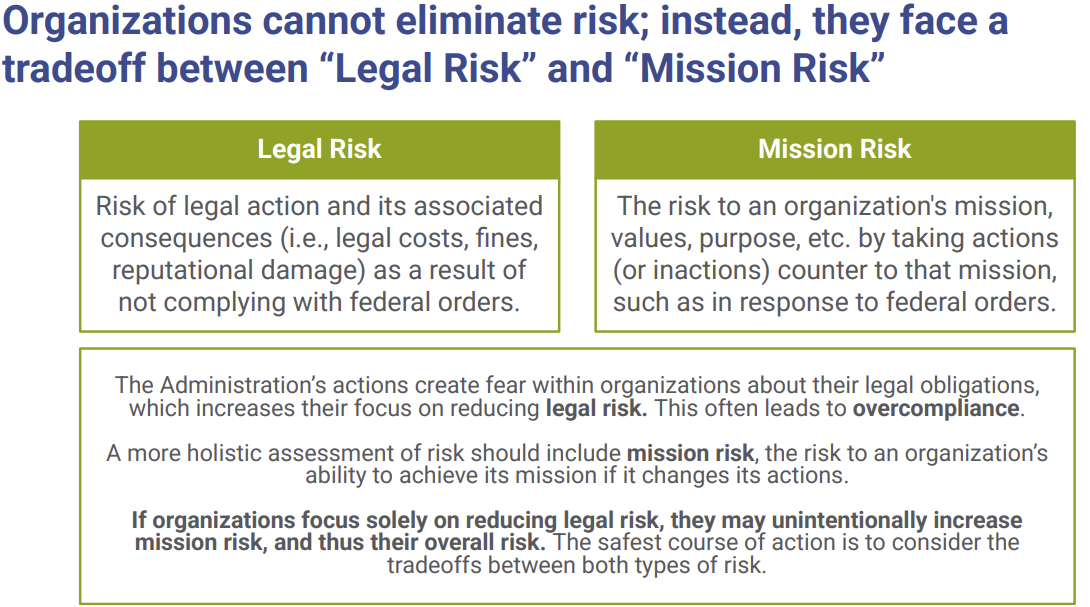
Slide from: Facts in the Flood: Strategies for Responding, Education First, 2025.
Photo credit: Wikipedia
